
Principal Analyst
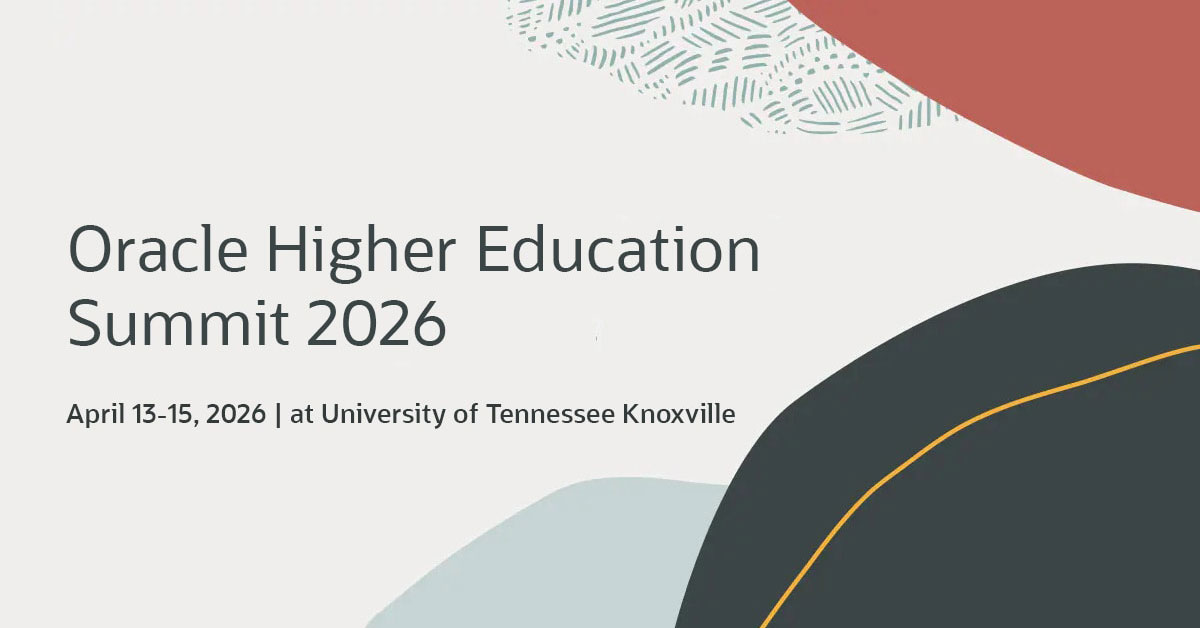
This week I attended the Oracle Higher Education Summit at the University of Tennessee, Knoxville. The event brought together institutional leaders and technologists to explore where the market is heading, with a strong focus on AI, platforms, and the future of enterprise systems in higher education. A few themes stood out that are worth highlighting.
One of the clearest messages from Oracle is the shift toward combining systems of record with what they describe as systems of outcomes. The idea is to move beyond systems that simply store and process data and toward platforms that actively help drive decisions and actions.
This vision comes through in Oracle AI Agent Studio and the broader Fusion platform. The concept of agentic applications and teams of AI agents working across workflows points to a more dynamic and responsive enterprise environment. For institutions, this opens up new possibilities in how work gets done and how services are delivered.
Another important theme was the idea of a shared foundation that supports multiple experience models. Whether it is traditional user interfaces, conversational interfaces, or agent-driven interactions, the goal is to enable flexibility in how users engage with systems.
This is particularly relevant in higher education, where user needs vary widely across students, faculty, and staff. The ability to support different interaction models on top of a common platform could help institutions deliver more personalized and accessible experiences over time.
The conversation around AI agents also naturally leads to a broader discussion about the future of work. As agents take on more responsibility for analyzing information and executing tasks, institutions have an opportunity to rethink how work is structured. This is not just about efficiency. It is about enabling staff to focus more on higher-value activities while routine processes become more automated and coordinated. This shift will take time, but it represents an important step in the evolution of enterprise systems in higher education.
Institutional perspectives reinforced that transformation at this scale requires significant planning and investment. Jen Chavez, CIO at Tennessee Tech, shared: “We underestimated the amount of resources we would need for transformation.” That insight highlights the importance of aligning resources, timelines, and expectations early in the process.
Chiradeep Mukherjee from the University of Maryland, Baltimore, emphasized that change management deserves an equal seat at the table. As institutions adopt new platforms and capabilities, ensuring that people, processes, and culture evolve alongside the technology will be critical to long-term success.
Student feedback sessions provided a helpful reminder of what matters most from an end-user perspective. Students pointed to ongoing challenges around transfer credit, registration, and finding information across systems. They also expressed a desire for a more unified and streamlined digital experience.
These insights reinforce the importance of grounding innovation in real user needs. As new capabilities like AI agents are introduced, there is a strong opportunity to simplify and improve the student journey in meaningful ways.
Oracle highlighted the scale of its AI investments, including a rapidly expanding set of AI agents embedded across the platform. There was also discussion around the role higher education has played in shaping AI innovation, which speaks to the sector’s continued influence in this space. As these capabilities evolve, the opportunity for institutions will be in applying them in ways that align with their specific missions, processes, and student populations.
It was encouraging to see a range of institutions moving forward with Oracle Student. Many of these early adopters are also implementing, or have already implemented, Oracle Financial Aid, with some approaching major milestones.
These institutions are helping to define what adoption looks like in practice, particularly as they navigate complex areas like financial aid under tight timelines. Their experiences will provide valuable insights for the broader community as more institutions begin their own journeys.
The Oracle Higher Education Summit highlighted a clear direction of travel for the market. AI, agent-driven workflows, and unified platforms are becoming central to how enterprise systems are evolving.
At the same time, the conversation consistently came back to execution. Success will depend on how well institutions align strategy, resources, and change management with these new capabilities.
There is a meaningful opportunity here to improve how institutions operate and how they serve students. The next phase will be about turning that potential into real, measurable outcomes.
Originally posted by Matthew Winn on LinkedIn. Be sure to follow him there to catch all his great industry insights.
Share Article:

© Copyright 2026, The Tambellini Group. All Rights Reserved.
Get exclusive access to higher education analysts, rich research, premium publications, and advisory services.